思考与长文
Parenting Styles and Adolescent Self-Esteem: Unveiling the Significant Roles of Grade Level and Birth Order
- First Author: Yiming Wu
- Co-Authors / Team Members: Jingxiang Zhang, Yixiu Luo, Pengyu Yan
- Word Count: 1497 Words*
Abstract
This study examines the predictors of adolescent self-esteem, testing Baumrind's (1991) framework on parenting styles against developmental factors. Data from 51 students (Grades 7–13) were analyzed using Bootstrap multiple regression to address non-normality and sample size limitations. While descriptive statistics supported the view that authoritative parenting yields higher self-worth, the regression revealed no statistically significant main effect for parenting styles. Instead, results aligned with Robins et al. (2002), identifying Grade level as a robust positive predictor, supporting the hypothesis that self-esteem matures with age. Additionally, Birth Order emerged as significant, with youngest children reporting higher self-esteem than firstborns. These findings suggest that developmental maturity and family roles may exert a stronger influence on self-esteem than parenting styles alone.
Keywords: Self-esteem, Parenting Styles, Bootstrap Regression, Birth Order, Adolescence, Maturation Principle
1 Introduction
Self-esteem is a critical psychological barometer for adolescents. It is a fundamental predictor for self-achievement, academic achievement and mental well-being. Self-esteem is determined and affected by many factors, one of which is family context, specifically the style of parenting authority.
Style of parenting has often been viewed as primary constructor of adolescent's self-worth. Diana Baumrind in her article The influence of Parenting Styles on Adolescent Competence and Substance Use (Baumrind, 1991) introduced the concept of three parenting styles: authoritative, authoritarian and permissive. Among these, authoritative parenting is most commonly linked with positive self-esteem development outcomes. The research done by Milevsky, Schlechter, Netter and Keehn (2007) reinforced the view that adolescents raised in authoritative households showed significantly higher self-esteem compared with the other two. Based on these established frameworks, our primary hypothesis points that students perceiving their parents as authoritative will report the highest levels of self-esteem.
However, viewing adolescent growth solely on parenting styles is too simplistic. As individuals mature, their self-worth can be affected by other factors such as their own development stage and their role in the family structure. From the development perspective Robins et al. (2002) suggested that self-esteem is not static, it increases as individuals mature, therefore stating that the student's grade level is also a significant predictor of self-worth.
Furthermore, a family structure not only consists of parent-child dyad. Siblings and birth order also comes into consideration. Adler (1956) in his work on individual psychology argued that birth order significantly influences personality formation. He suggests that the youngest child often receives extra attention and protection, potentially buffering them against pressures faced by firstborns. Therefore, we also hypothesize that situational factors such as grade level and family roles will exert different effects on adolescents' self-esteem. To ensure a robust conclusion, this study uses Bootstrap multiple regression analysis to rigorously test these relationships.
2 Methodology
2.1 Participants and Procedure
In order to analyze the relationship between the type of parent and students' self-esteem, we use two authoritative questionnaires, the one is Rosenberg Self-Esteem Scale (RSES), and the one is the parental authority questionnaire to collect data. During this process, we collected 51 students who come from G7 to G13. That is, the quantity of data is a limited sample size to support conducting traditional multiple regression, which needs plenty of data to make a Gaussian distribution in order to make conclusions more accurate. So we found another analysis method to address the limitation, "Bootstrap multiple regression and BCa 95% Confidence Interval".
3 Results
3.1 Preliminary Analysis: Control of Demographic Variables
To rule out confounding effects, One-way ANOVA was first conducted. Results indicated no significant main effects for Primary Caregiver (F = 0.51, p = .605) or Birth Order (F = 2.17, p = .104) on self-esteem. As previously reported, Grade also did not show significance in standard ANOVA (p = .235).
However, the subsequent Bootstrap regression analysis (Table 3) revealed more nuanced findings:
- Grade emerged as a significant positive predictor of self-esteem (Coefficient = 0.99, 95% BCa CI [0.03, 2.22]), suggesting that self-esteem tends to increase with grade level.
- Birth Order showed a specific effect: being the "Youngest" child significantly predicted higher self-esteem compared to the firstborn (Coefficient = 4.09, 95% BCa CI [0.01, 9.49]), a pattern not detected by the standard ANOVA.
Table 1 One-way ANOVA Results for Grade
| Cases | Sum of Squares | df | Mean Square | F | p | η² |
|---|---|---|---|---|---|---|
| Grade | 281.5 | 6 | 46.92 | 1.404 | .234 | 0.161 |
| Residuals | 1470.2 | 44 | 33.41 | — | — | — |
Note. Type III Sum of Squares.
3.2 Main Effect of Parenting Styles
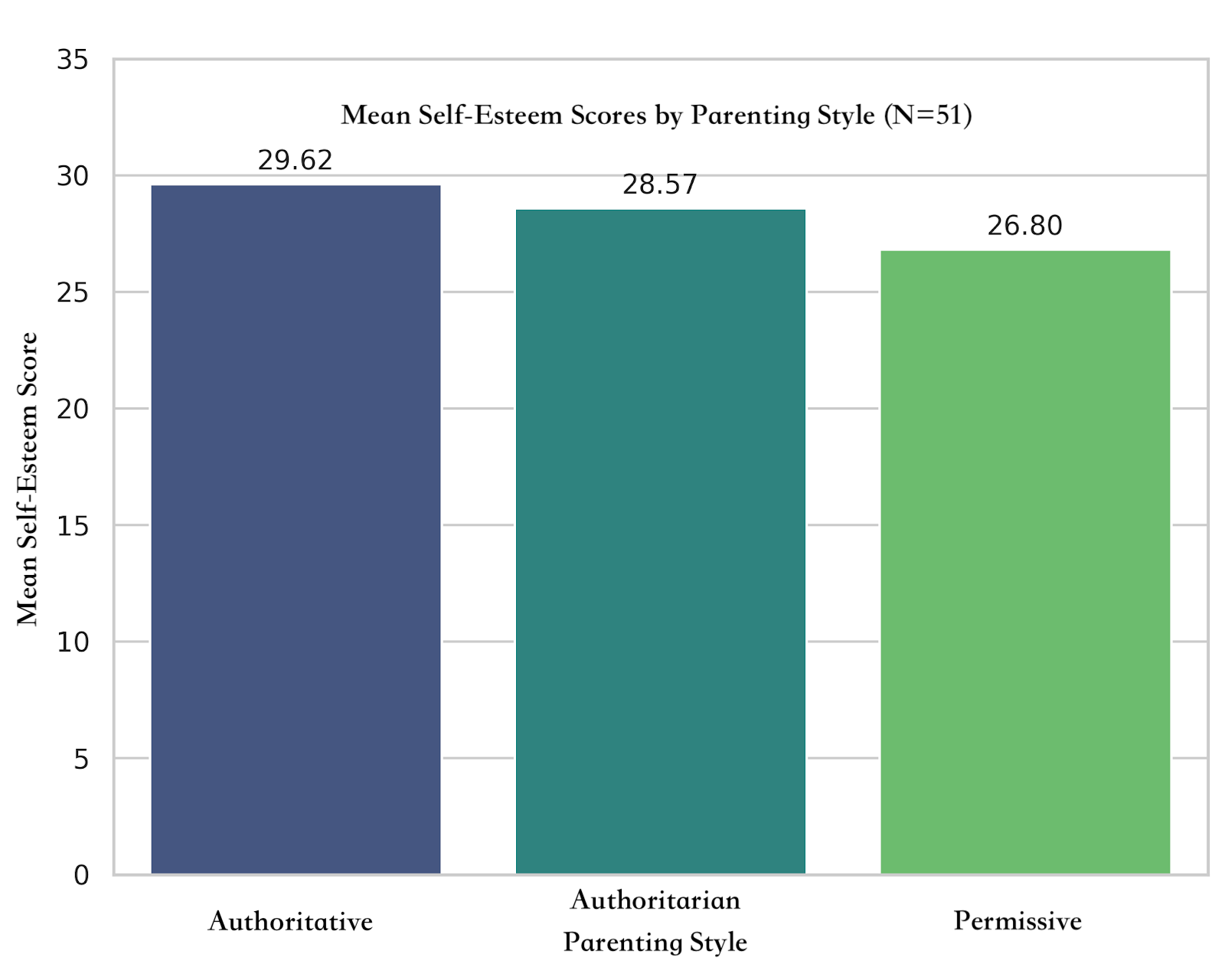
Descriptive statistics showed that adolescents raised in Authoritative families reported the highest self-esteem (M = 29.62), followed by Authoritarian (M = 28.57) and Permissive (M = 26.80) families. This trend aligns with the theoretical expectation that authoritative parenting fosters the highest self-worth.
Figure 1 Mean self-esteem scores across three parenting styles
Standard One-way ANOVA indicated that the differences between these groups were not statistically significant (F(2, 48) = 0.89, p = .419).
Table 2 One-way ANOVA Results for Parenting Styles
| Cases | Sum of Squares | df | Mean Square | F | p | η² |
|---|---|---|---|---|---|---|
| Parenting | 62.34 | 2 | 31.17 | 0.886 | .419 | 0.036 |
| Residuals | 1689.34 | 48 | 35.19 | — | — | — |
Note. Type III Sum of Squares.
3.3 Bootstrap Regression Analysis
To further explore the predictors of self-esteem while handling non-normality, a Bootstrap linear regression (10,000 resamples) was conducted. The model included Parenting Style, Birth Order, Caregiver, and Grade.
As shown in Table 3, when using "Authoritarian" as the reference group:
- Neither Authoritative (Coef = 1.11) nor Permissive (Coef = 0.77) styles showed a significant difference from the reference group (Significant = False), confirming the ANOVA result.
- The model highlights that in this sample, Grade was a robust predictor. The bootstrap distribution of the Grade coefficient is centered around a positive value, with the confidence interval excluding zero.
Figure 2 Bootstrap distribution of the regression coefficient for Grade. The 95% Confidence Interval excludes zero, indicating a significant positive relationship.
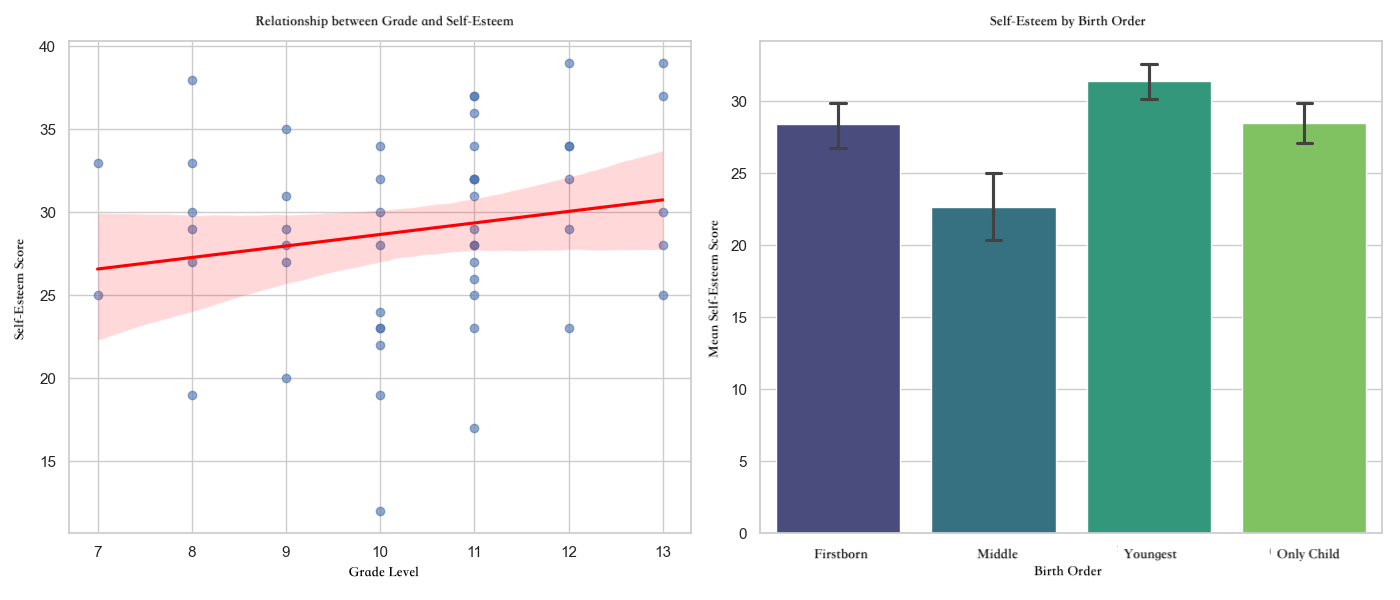
Table 3 Bootstrap Coefficients and Confidence Intervals
| Predictor | Coefficient (B) | 95% CI (Lower) | 95% CI (Upper) |
|---|---|---|---|
| Constant | 16.22 | 0.87 | 28.01 |
| Grade Level | 0.99* | 0.03 | 2.22 |
| Parenting Style (Ref: Authoritarian) | |||
| Authoritative | 1.11 | -2.55 | 7.19 |
| Permissive | 0.77 | -4.79 | 7.72 |
| Birth Order (Ref: Firstborn) | |||
| Middle Child | -4.85 | -13.64 | 1.29 |
| Only Child | 0.57 | -3.93 | 5.97 |
| Youngest Child | 4.09* | 0.01 | 9.49 |
| Primary Caregiver (Ref: Mother) | |||
| Father | 2.54 | -2.83 | 8.17 |
| Other | 1.27 | -4.8 | 4.96 |
4 Discussion
4.1 The "Authoritative Advantage" Trend
Although the main effect of parenting style did not reach statistical significance (p > .05), the descriptive patterns observed in this study align with Baumrind's (1991) typology. Adolescents raised in Authoritative households reported the highest self-esteem (M = 29.62), while those in Permissive households reported the lowest (M = 26.80). This suggests that a combination of parental warmth and clear behavioral standards provides the optimal environment for self-esteem development. The lack of statistical significance likely reflects the limited sample size rather than the absence of an effect, as the numerical trend is consistent with established literature.
4.2 Cultural Context: The Function of Authoritarian Parenting
A notable finding is that adolescents from Authoritarian families reported relatively high self-esteem (M = 28.57), ranking second only to the Authoritative group. This contradicts early Western studies that often linked authoritarianism with poor self-concept. This discrepancy can be interpreted through the lens of Chao (1994), who argued that in Chinese cultural contexts, strict control is often synonymous with "Guan" (training/care). For the students in this sample, high parental demands may be perceived as an expression of parental involvement and high expectations rather than hostility, thus preserving their academic self-efficacy and overall self-esteem.
4.3 The "Maturation Effect": Grade Level as a Predictor
A key finding from the Bootstrap analysis was that Grade level significantly positively predicted self-esteem. This supports the "Maturation Principle" described by Robins and Trzesniewski (2005), who found that self-esteem typically increases from adolescence through young adulthood. As students progress from Grade 7 to Grade 13, they gain greater autonomy, improved coping skills, and a more stable sense of identity. This study suggests that as adolescents mature, these developmental factors may exert a stronger influence on their self-worth than early parenting styles.
4.4 Birth Order: The "Youngest Child" Advantage
Unexpectedly, being the "Youngest" child was a significant predictor of higher self-esteem compared to firstborns. While Adler (1956) historically suggested that youngest children might struggle with inferiority or dependency, more recent reviews (e.g., Eckstein et al., 2010) indicate that birth order effects are complex and context-dependent. In the current high-pressure academic environment, youngest children may benefit from a "psychological buffer"—receiving high affection and support from parents and older siblings while facing less immediate pressure to achieve compared to firstborns. This "benign" position in the family niche may contribute to their higher reported self-esteem.
4.5 Limitations
Several limitations warrant consideration. First, the modest sample size (N = 51) likely constrained the statistical power to detect a significant main effect for parenting styles, despite the observed descriptive trends. Second, reliance on self-report data introduces potential social desirability bias. Finally, the cross-sectional design precludes causal inferences, particularly regarding the observed "maturation effect" of grade level. Future research should employ larger, longitudinal samples to validate these developmental patterns.
5 Conclusion
In conclusion, this study demonstrates that adolescent self-esteem is driven by more than just parenting styles. While descriptive data favored authoritative parenting, statistical analysis identified Grade level and Birth order as the primary predictors. The positive correlation between Grade and self-esteem supports the "Maturation Principle," indicating that self-worth grows with autonomy. Additionally, the significant advantage found for the youngest children suggests a protective family role. These results imply that as adolescents develop, individual maturity and family structure may outweigh the direct impact of parenting style. Future research with larger samples is recommended to further explore these developmental dynamics.
Author Contributions
Y. Wu conceptualized and designed the study, performed the statistical analysis (including ANOVA and Bootstrap regression), wrote the Results and Discussion sections, revised the manuscript, and was responsible for final formatting and proofreading. J. Zhang was responsible for the Methodology section and assisted with data collection. Y. Luo drafted the Introduction section and contributed to the literature review. P. Yan wrote the Abstract and Conclusion sections and assisted with data collection. All authors reviewed and approved the final manuscript.
References
Adler, A. (1956). The Individual Psychology of Alfred Adler: A systematic presentation of selections from his writings (H. L. Ansbacher & R. R. Ansbacher, Eds.). Basic Books.
Baumrind, D. (1991). The influence of parenting style on adolescent competence and substance use. Journal of Early Adolescence, 11(1), 56–95.
Milevsky, A., Schlechter, M., Netter, S., & Keehn, T. (2007). Maternal and paternal parenting styles in adolescents: Associations with self-esteem, depression and life-satisfaction. Journal of Child and Family Studies, 16(2), 39–47.
Robins, R. W., Trzesniewski, K. H., Tracy, J. L., Gosling, S. D., & Potter, J. (2002). Global self-esteem across the life span. Psychology and Aging, 17(3), 423–434.
Chao, R. K. (1994). Beyond parental control and authoritarian parenting style: Understanding Chinese parenting through the cultural notion of training. Child Development, 65(4), 1111–1119.
Eckstein, D., & Kaufman, J. A. (2012). The role of birth order in personality: An enduring intellectual legacy of Alfred Adler. Journal of Individual Psychology, 68(1), 60–74.
Maccoby, E. E., & Martin, J. A. (1983). Socialization in the context of the family: Parent-child interaction. In P. H. Mussen (Ed.), Handbook of child psychology (Vol. 4, pp. 1–101). Wiley.
Robins, R. W., & Trzesniewski, K. H. (2005). Self-esteem development across the lifespan. Current Directions in Psychological Science, 14(3), 158–162.